Irresistible Miso Butter Glazed Kabocha Squash
Easy Miso Butter Glazed Kabocha Squash is a cozy fall side dish with creamy Japanese pumpkin, caramelized edges, and a rich savory-sweet miso glaze. This simple roasted squash recipe is perfect for weeknight dinners, Thanksgiving menus, holiday meals, and vegetarian sides.
This post may contain affiliate links. Your purchase helps support this blog, at no additional cost to you, and allows me to continue to bring you delicious recipes.
Roasted kabocha squash becomes something extraordinary when coated in a miso butter glaze that balances sweet, salty, buttery, and umami flavors. As the squash turns tender and caramelized in the oven, the miso blends into the warm butter to create a rich glaze that highlights its natural sweetness while adding deep savory complexity. It’s a simple, Japanese‑inspired twist that brings comforting autumn flavor to any meal. This easy roasted kabocha squash works for a weeknight meal, yet it looks polished enough for a holiday spread.
What Is Kabocha Squash and Where Does It Come From?
Kabocha is a winter squash with a squat shape, dark green skin, and vivid orange flesh. It is often called Japanese pumpkin which is ironic because it’s from South America. Portuguese traders introduced related squash to Japan in the 1500s.
Kabocha became deeply rooted in Japanese cooking and agriculture. Today, it appears in simmered dishes, tempura, soups, and roasted vegetable recipes. Its texture is dense, smooth, and almost chestnut-like after cooking. The flavor is naturally sweet, with gentle nutty notes.
What Is Miso and Who Invented It?
Miso is a fermented paste made from soybeans, salt, and koji. Koji is a cultivated grain that starts fermentation. Some varieties also include rice or barley. International grocery stores commonly carry several types:
- White miso (shiro miso): Mild, lightly sweet, and smooth. It works well in glazes, dressings, soups, and sauces.
- Yellow miso (shinshu miso): Balanced and moderately salty, with a fuller flavor than white miso. It suits everyday soups, marinades, and vegetable dishes.
- Red miso (aka miso): Darker, saltier, and more robust because it usually ferments longer. It adds depth to stews, braises, and hearty glazes.
- Mixed miso (awase miso): A blend of two or more miso styles, often white and red. It offers a versatile balance of sweetness and savory flavor.
- Barley miso (mugi miso): Made with barley koji. It has an earthy, aromatic taste and is common in southern Japan.
- Soybean miso (mame miso): Made mainly from soybeans, with little or no added grain. It is dark, intense, and deeply umami-rich. Hatcho miso is a well-known style.
- Chickpea miso: A modern soy-free option with a mellow, slightly nutty flavor. Availability varies by store.
- Reduced-sodium miso: A lower-salt commercial option for shoppers who want more control over seasoning. Its flavor varies by brand.
Fermented soybean pastes developed in ancient China and traveled to Japan many centuries ago. Japanese makers refined regional styles over time. By the medieval period, miso had become an important part of everyday Japanese food. The most popular use being miso soup but it’s also used in sauces and spreads as well as used for pickling. Today, the colored labels used on packages are helpful guides, but ingredients, salt levels, and fermentation times can differ by brand.
How Miso Butter Turns Roasted Kabocha Into Pure Comfort
Kabocha has enough natural sugar to balance the salty depth of the miso butter glaze. Roasting concentrates the sweetness of the squash. Miso brings concentrated umami and salt in one spoonful while butter softens that intensity with rich dairy flavor. They combine to create a savory butter glaze that tastes complex with just a few simple ingredients.
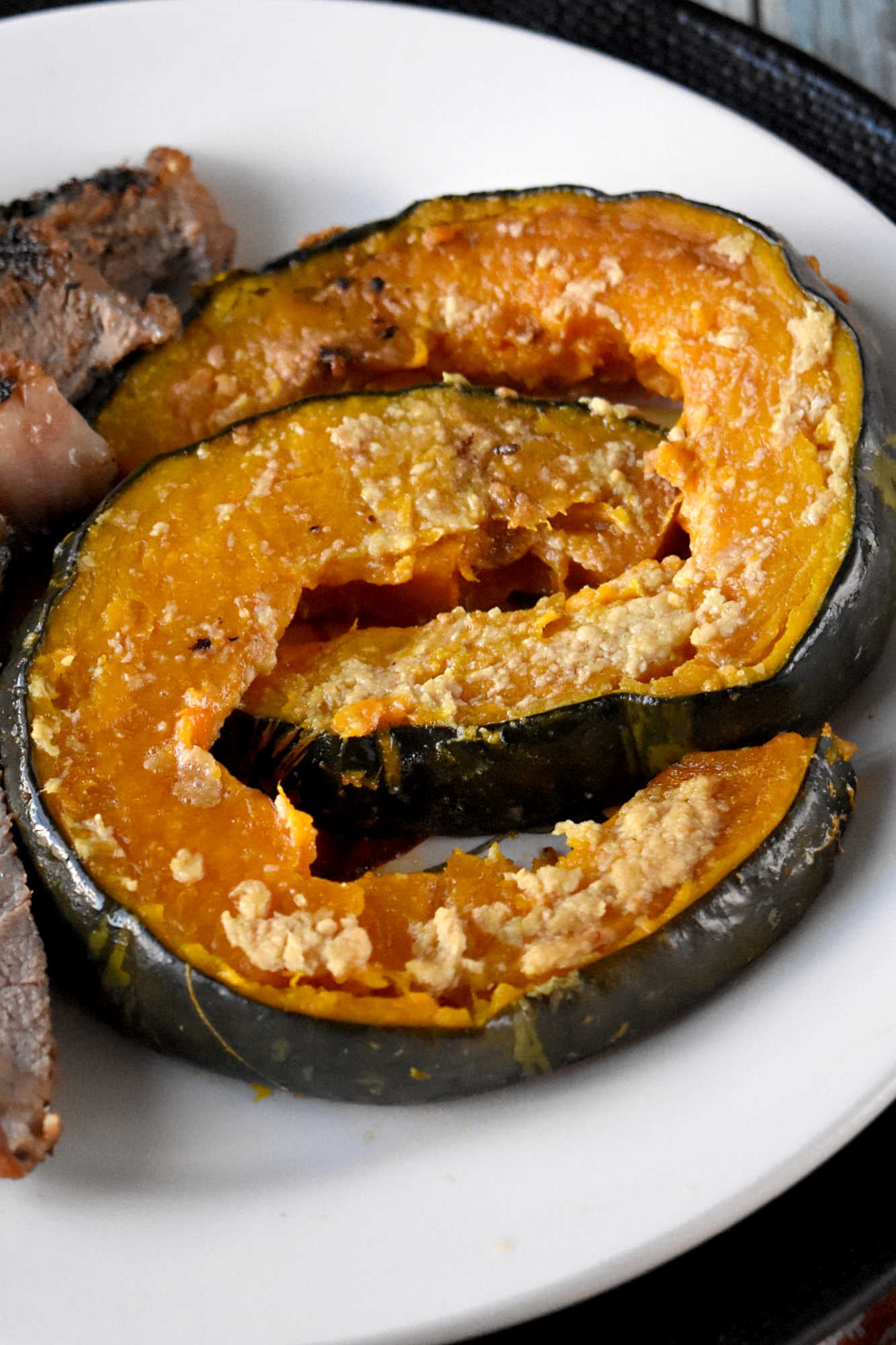
The firm flesh of the kabocha squash holds its shape well in the oven. It becomes tender without collapsing into puree. As the butter melts, it carries the miso across every ridge and cut edge. The glaze clings instead of sliding away. Heat deepens its flavor and creates browned patches that are caramelized bits of miso goodness.
Can You Roast Kabocha Seeds Like Pumpkin Seeds?
Yes. Kabocha seeds roast much like pumpkin seeds. Seeds from butternut, acorn, delicata, spaghetti, buttercup, Hubbard, carnival, and sugar pumpkin can also be roasted. Separate the seeds from the stringy pulp, rinse well, and dry them thoroughly. Moisture creates steam, so dry seeds become noticeably crisper.
Toss the seeds with a small amount of olive oil and a light pinch of salt. Roast them at 325°F until golden and crisp, stirring once or twice. Start checking small delicata and acorn squash seeds after 8 to 10 minutes. Larger kabocha, Hubbard, butternut, and pumpkin seeds may need 12 to 20 minutes.
How to Cut the Squash into Slices for Roasting
Wash and dry the squash. If very firm, pierce with a fork and microwave for 2 to 3 minutes; cool slightly. I used the longer chef’s knife because my squash was about 8 to 9 inches round. Trim both ends, stand the squash on a flat end, and carefully cut it in half.
Scoop out the seeds and stringy pulp with a spoon. This is not as difficult as a carving pumpkin. The flesh was tender and the pulp was not as stringy. Save the seeds if you want to roast them. Place each half cut-side down and cut crosswise into 1-inch half-moons.
How to Adjust the Glaze for More Sweetness, Salt, Umami, or Heat
For more sweetness, stir in a small spoonful of maple syrup or honey. For extra salt, add more miso rather than plain salt. Taste the glaze before using it. Different miso brands can vary widely.
For stronger umami, add a little more white miso or a small amount of red miso. For heat, mix in shichimi togarashi, chili flakes, or a dab of chili paste or the popular chili crisp oil. Add spicy ingredients gradually. The goal is to elevate the glaze and not mask the delicate flavors.
Roasting Techniques for Tender Kabocha Squash
Do not cut the wedges too thin. Thin pieces can dry out before they become creamy. Avoid leaving the slices wet after washing. Water prevents the glaze from clinging and slows browning. Use a hot oven and a large sheet pan. Space the slices in one layer with room between them. Crowding traps steam and softens the edges. Direct contact with the pan encourages deep browning.
Avoid roasting the miso glaze at intense heat for too long. It contains natural sugars and can burn. Turn the slices once so both sides color. For those on the stem end, I didn’t flip those. Since I wasn’t eating the skin I didn’t need it to be caramelized. Also, test the squash with a fork to see if it’s tender. You can’t tell by looking at it.
Brush on any reserved glaze during the final minutes if a glossier finish is desired. Watch the squash closely because miso can darken quickly. The squash is ready when a knife slides easily through the flesh and the edges look caramelized.
What Miso Butter Glazed Kabocha Squash Tastes Like
The first bite is creamy, nutty, and softly sweet. Then the miso brings a savory depth that makes the squash taste even richer. Butter rounds the edges, while the browned glaze adds a gentle roasted bitterness. This roasted kabocha squash feels comforting without becoming heavy. The tender center contrasts with sticky, caramelized edges. It is a simple fall side dish with enough flavor to steal attention from the main course.
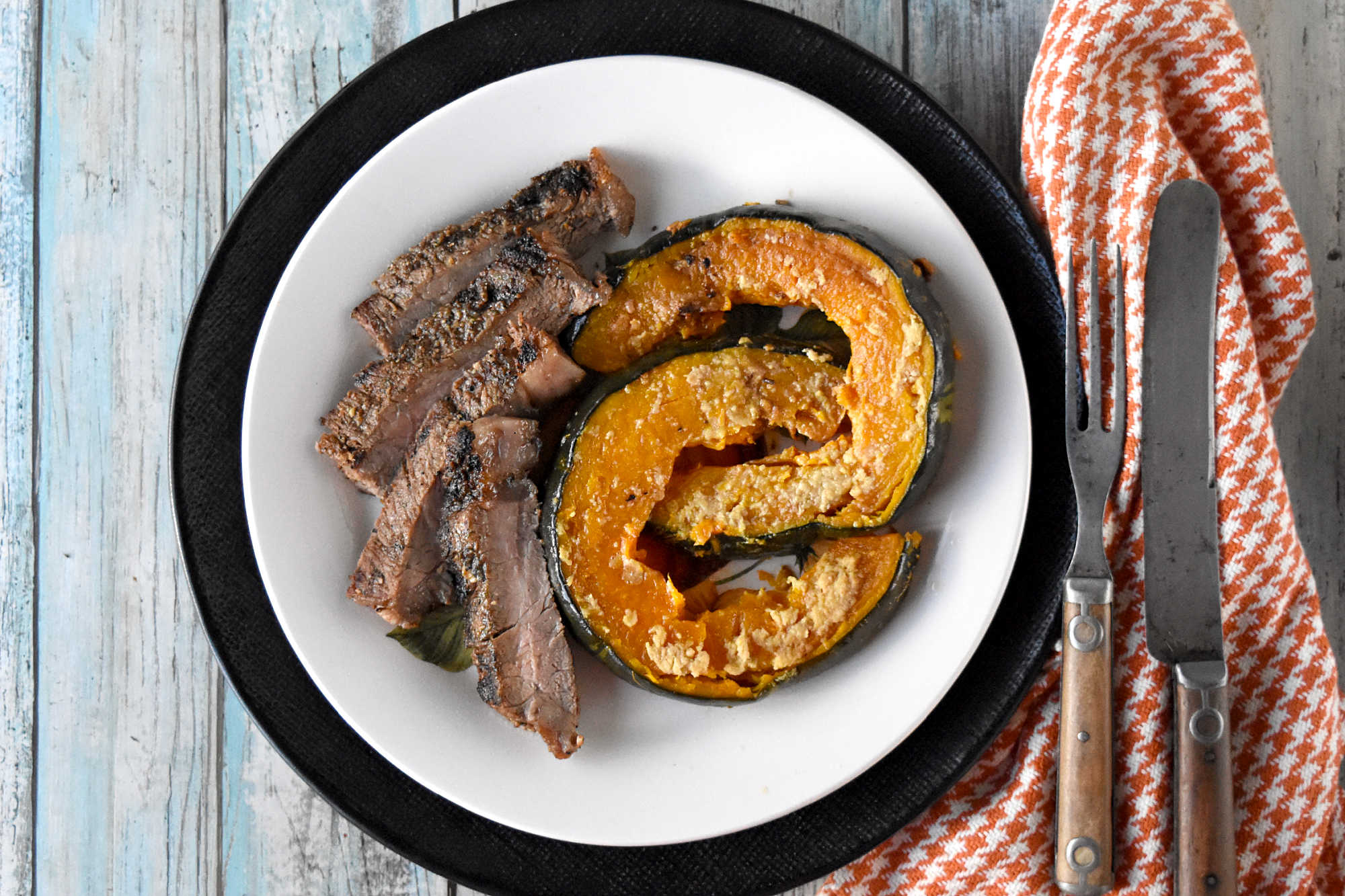
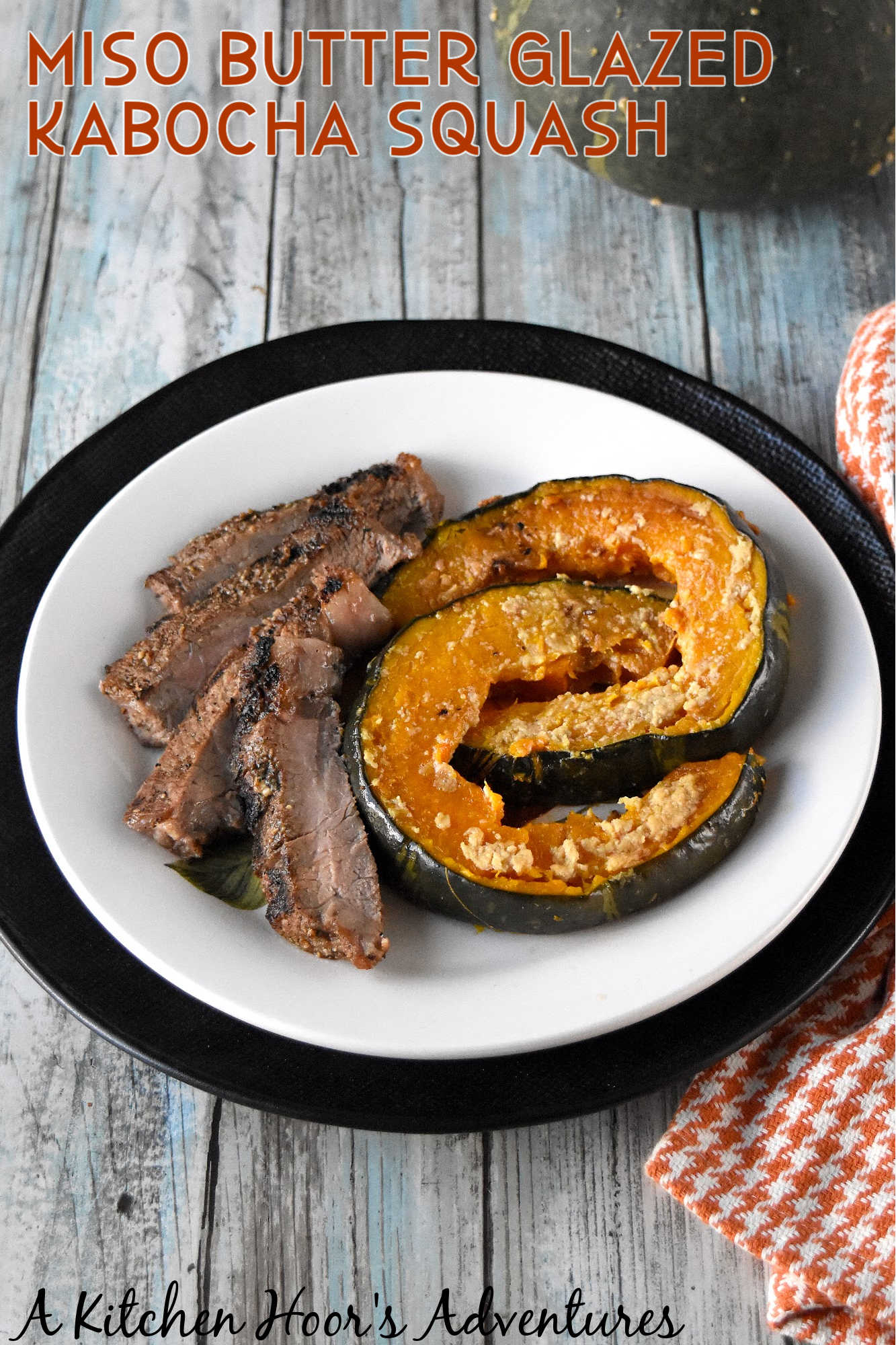
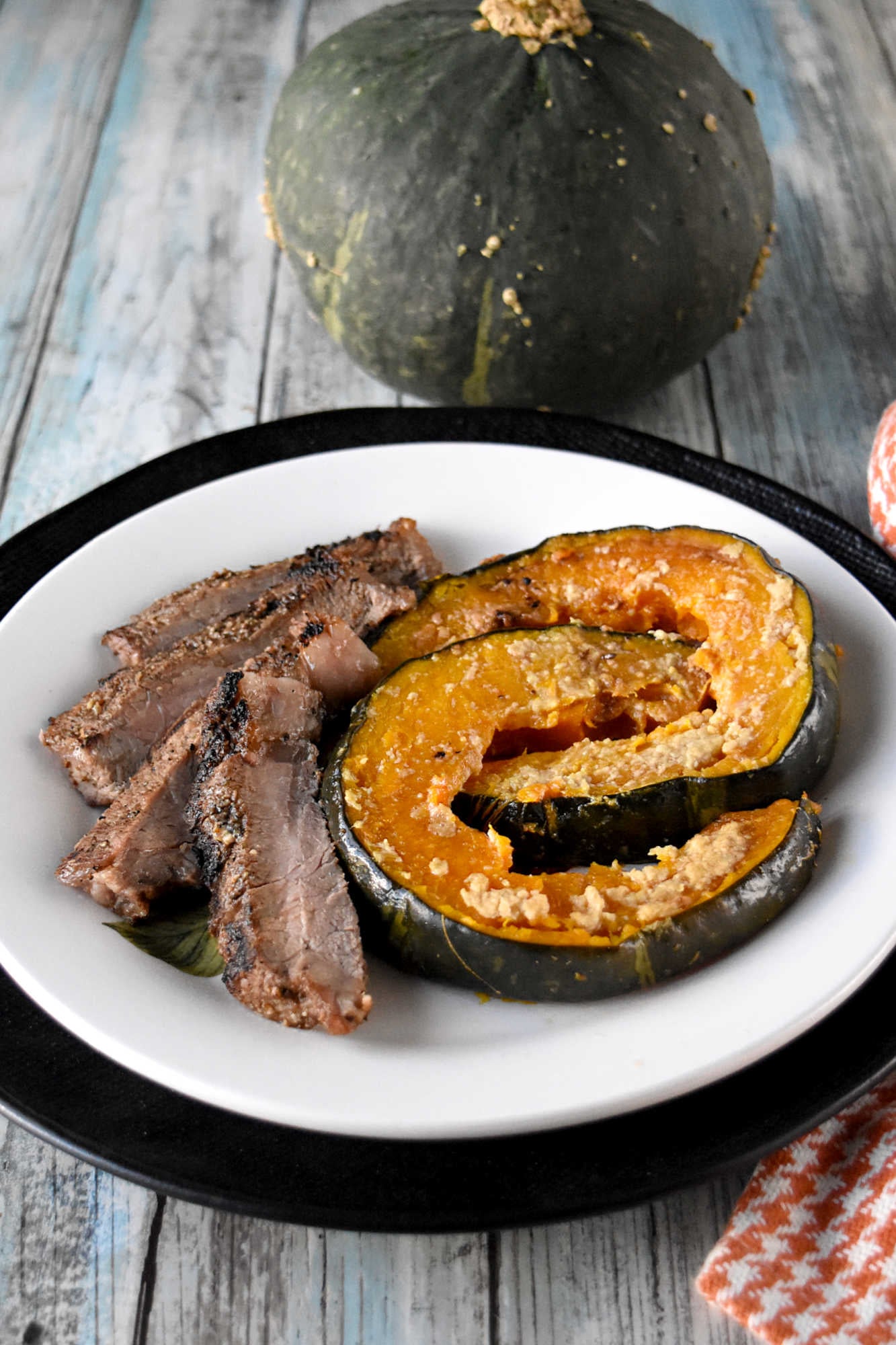
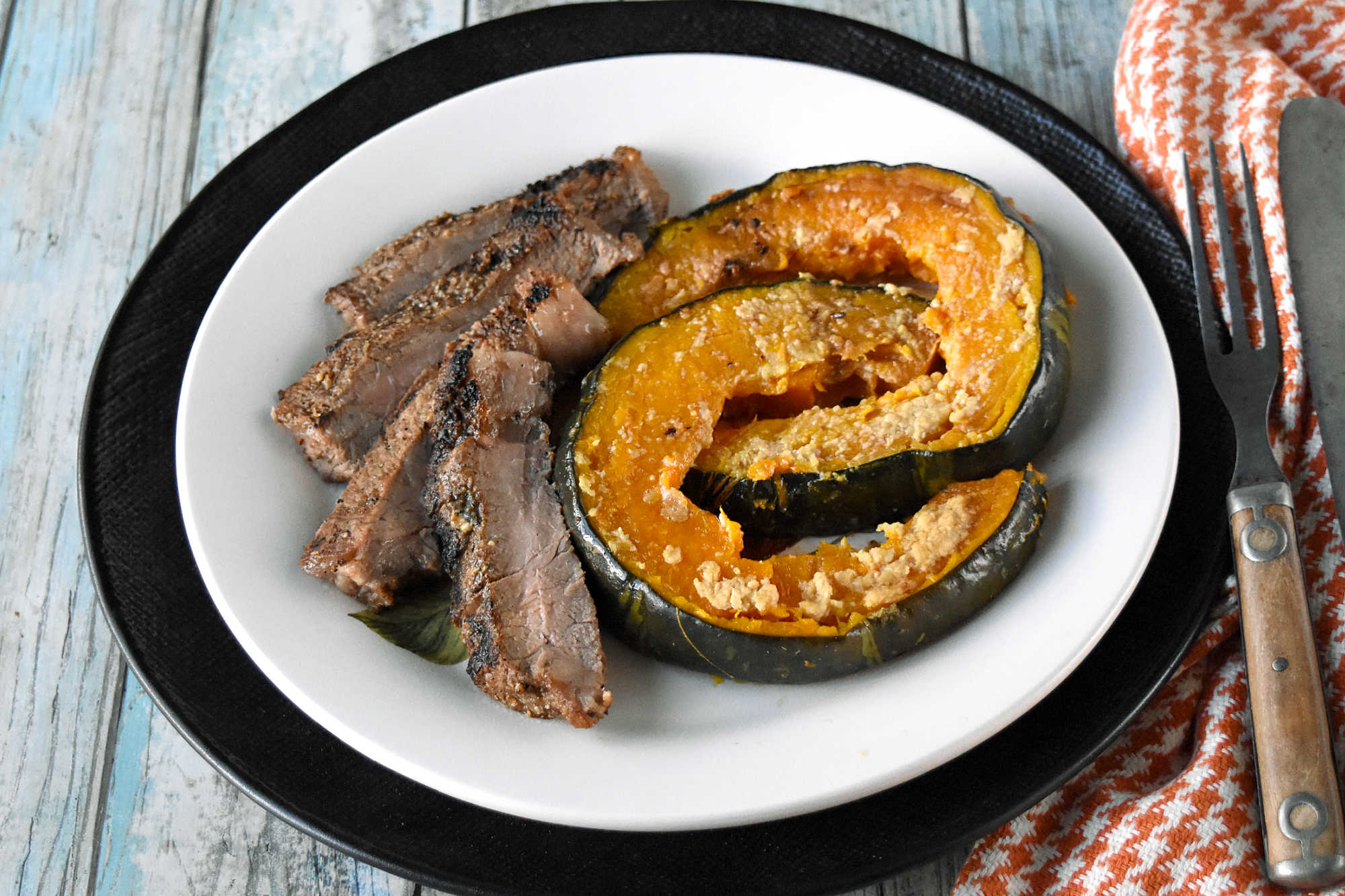
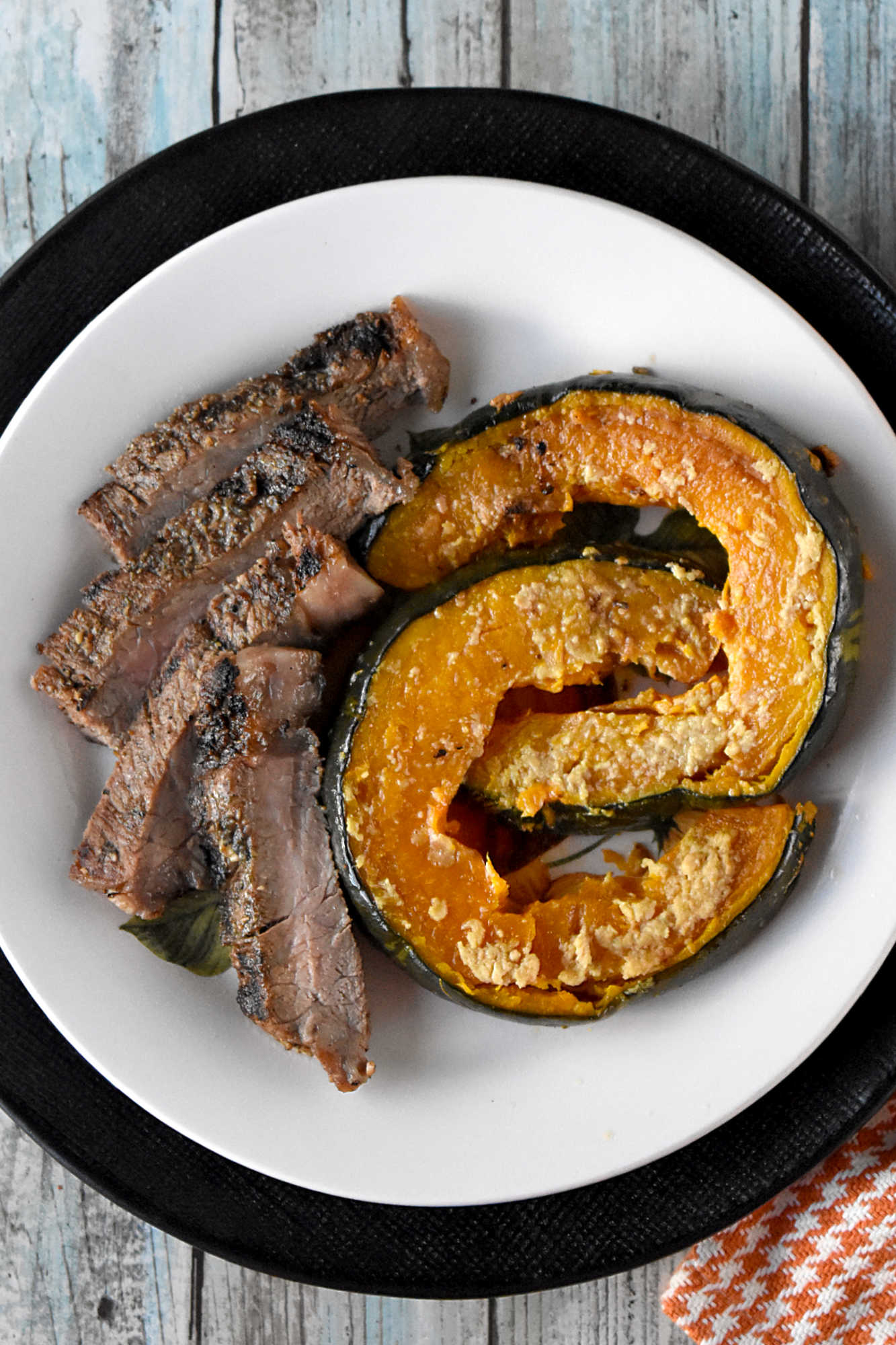
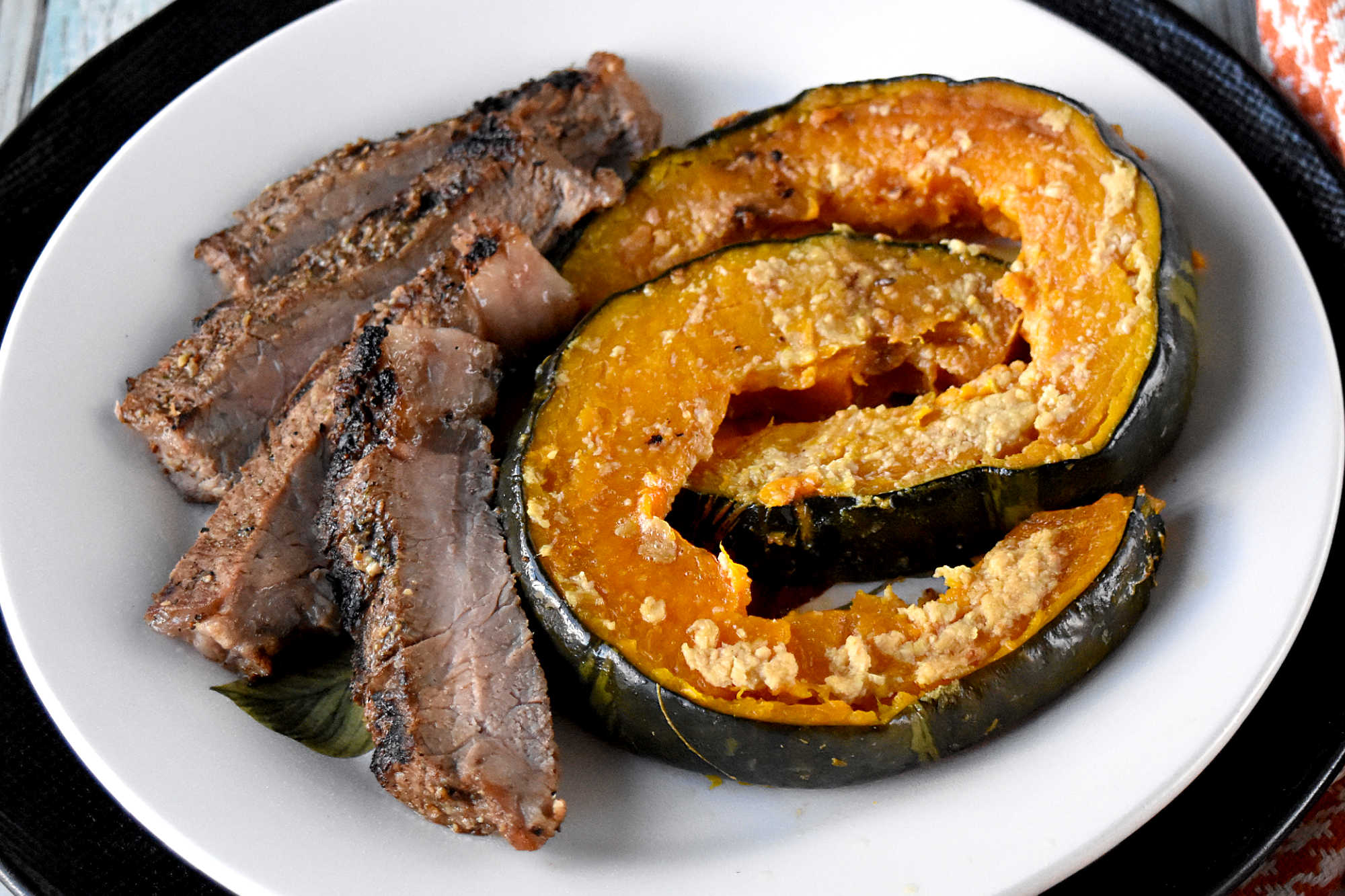
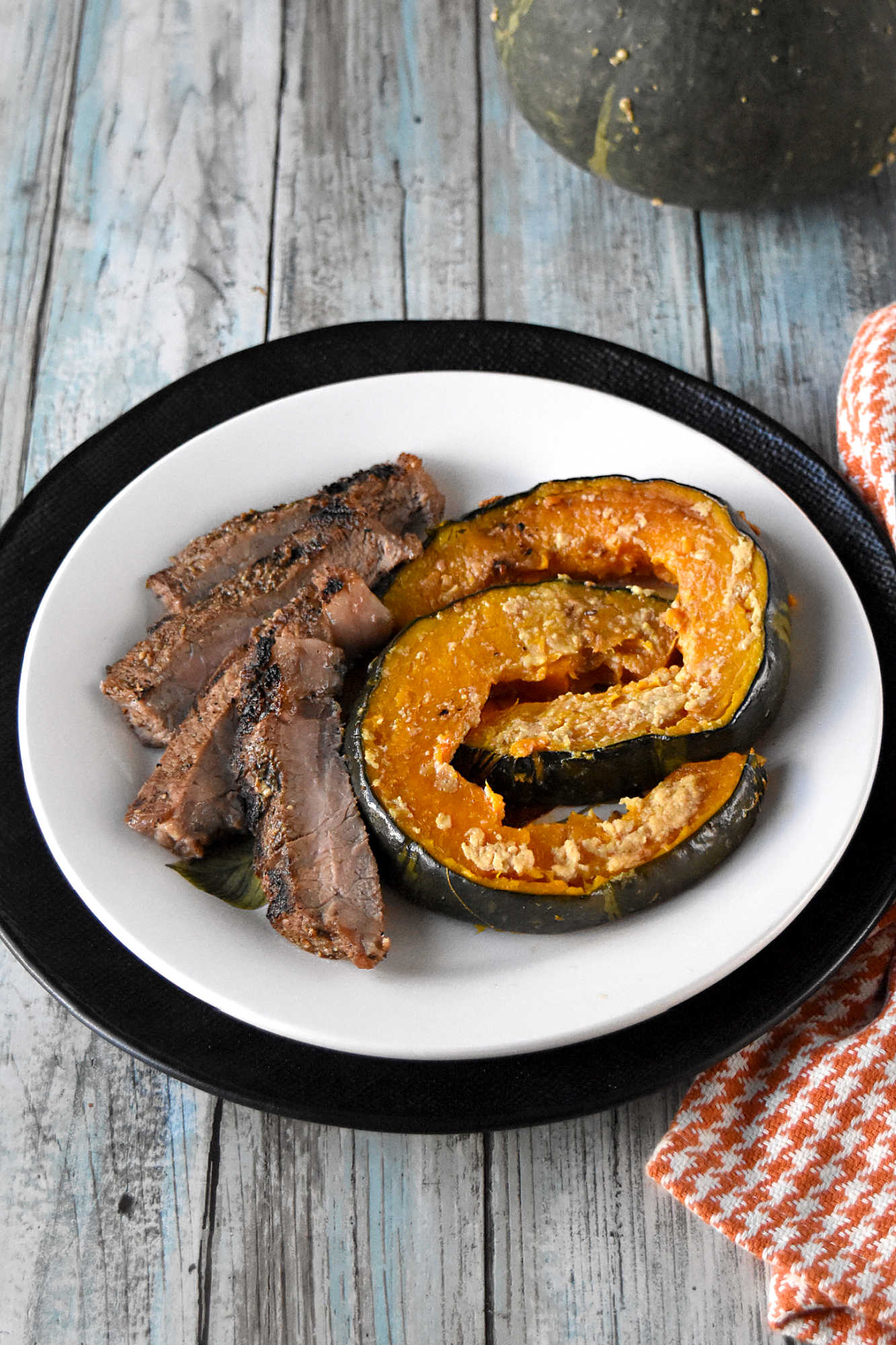
For a simple dinner, serve the glazed squash with steamed rice and a crisp cucumber salad. It also pairs well with noodles, tofu, roasted chicken, or salmon. I served mine with a nice grilled ribeye steak. And I thoroughly enjoyed them for lunch later in the week. Leftovers can top a grain bowl or tuck into a warm salad.
For a dinner party, arrange the slices in overlapping rows on a platter. Add toasted sesame seeds, sliced scallions, or fresh herbs if desired. Maybe some Thai basil? The glossy orange wedges look especially striking on a dark plate. Serve them warm, but not piping hot, so the flavors remain clear.

Miso Butter Glazed Kabocha Squash
Easy Miso Butter Glazed Kabocha Squash is a cozy fall side dish with creamy Japanese pumpkin, caramelized edges, and a rich savory-sweet miso glaze.
Ingredients
- 1 kabocha squash
- 4 tablespoons butter
- 4 tablespoons white miso
- 2 tablespoons olive oil
Instructions
- Heat the oven to 425°F. Line a large rimmed sheet pan for easier cleanup.
- Wash and dry the kabocha. Cut it in half, remove the seeds, and slice the halves into 1-inch wedges.
- Melt the butter. Whisk it with the white miso and olive oil until smooth.
- Coat the squash wedges with the glaze. Arrange them in a single layer on the pan, leaving space between the pieces.
- Roast for 15 minutes. Turn the wedges, then roast for 12 to 18 minutes more. The exact time depends on thickness.
- Remove the squash when the flesh is tender and the edges are deeply caramelized. Rest for a few minutes before serving.
Nutrition Information
Yield
4Serving Size
1Amount Per Serving Calories 202Total Fat 19gSaturated Fat 8gUnsaturated Fat 11gCholesterol 31mgSodium 626mgCarbohydrates 5gFiber 1gSugar 2gProtein 2g
- Caramelized Onion Savory Scones by The Spiffy Cookie
- Sweet Potato and Ham Quiche with Dill & Nutmeg by Faith, Hope, Love, & Luck Survive Despite a Whiskered Accomplice
- Apple Streusel Cookies by Karen’s Kitchen Stories
- Spiced Pear Vanilla Quick Bread by A Little Fish in the Kitchen
- Apple Cider Donut Cake by Hezzi-D’s Recipe Box
- Pumpkin Creme Brulee by Art of Natural Living
- Apple Cheddar Rosemary Bread by Blogghetti
- Apple Cinnamon Steel Cut Oats by Magical Ingredients
- Fig Salad by A Day in the Life on the Farm
- Apple Cider Snickerdoodles by Jolene’s Recipe Journal
- Miso Glazed Kabocha Squash by A Kitchen Hoor’s Adventures