
Holiday-Worthy Homemade Mushroom Rice Pilaf Everyone Will Love
Looking for a crowd-pleasing holiday side dish? Try this homemade mushroom rice pilaf recipe for rich flavor and easy preparation. Its savory mushrooms and fluffy rice will impress your guests. It’s a comforting and satisfying addition to any festive table.
This post may contain affiliate links. Your purchase helps support this blog, at no additional cost to you, and allows me to continue to bring you delicious recipes.
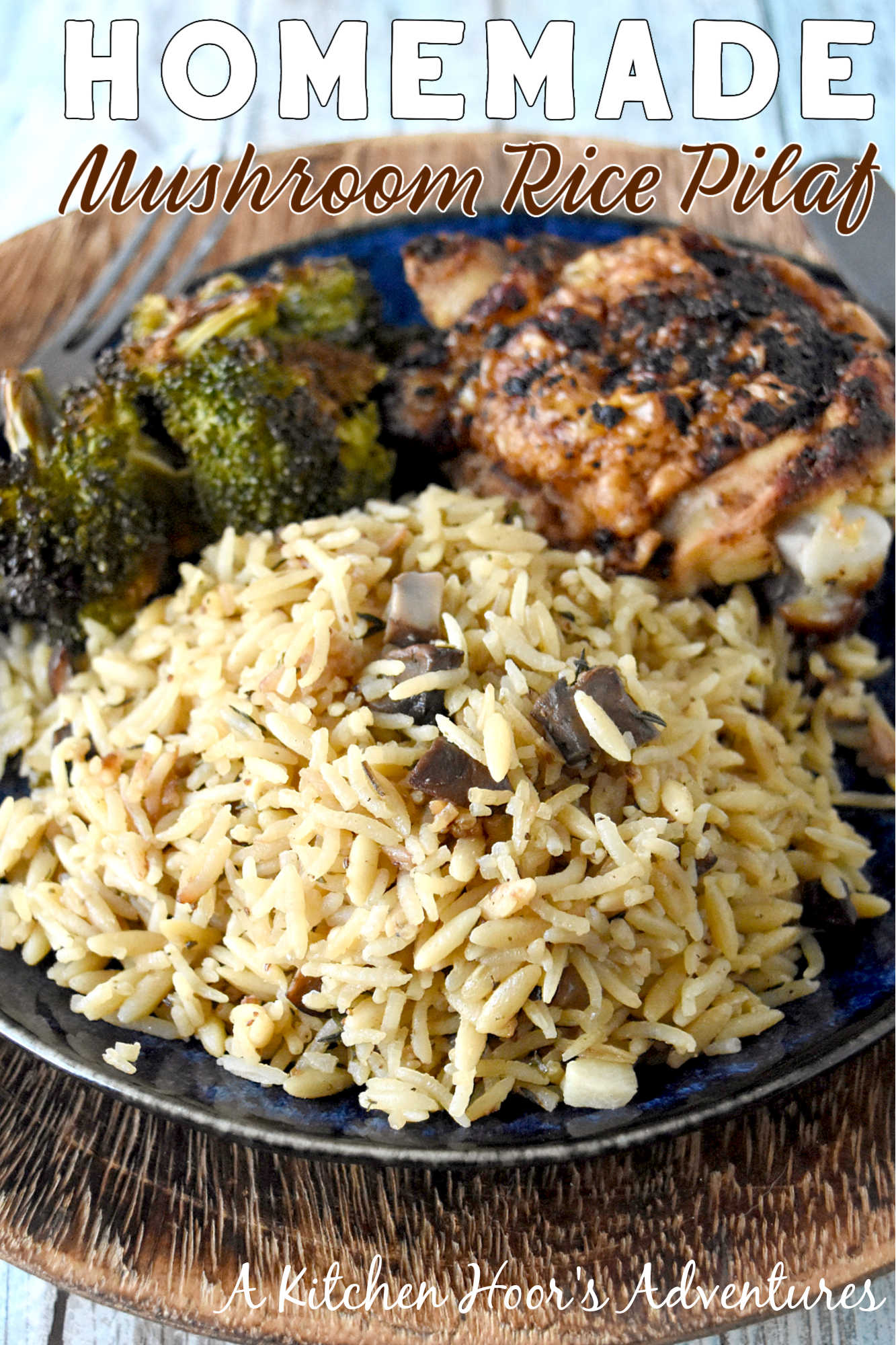
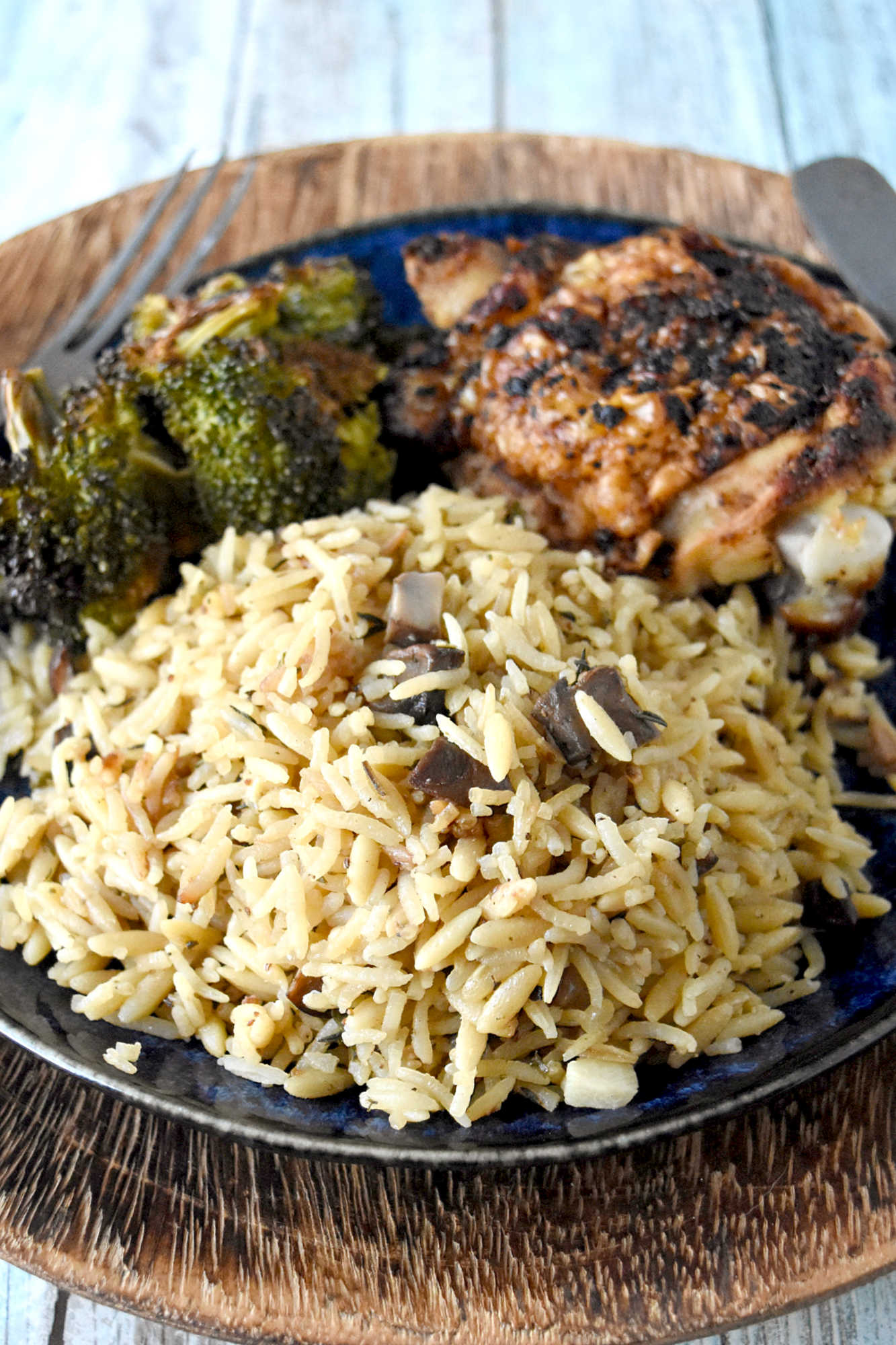
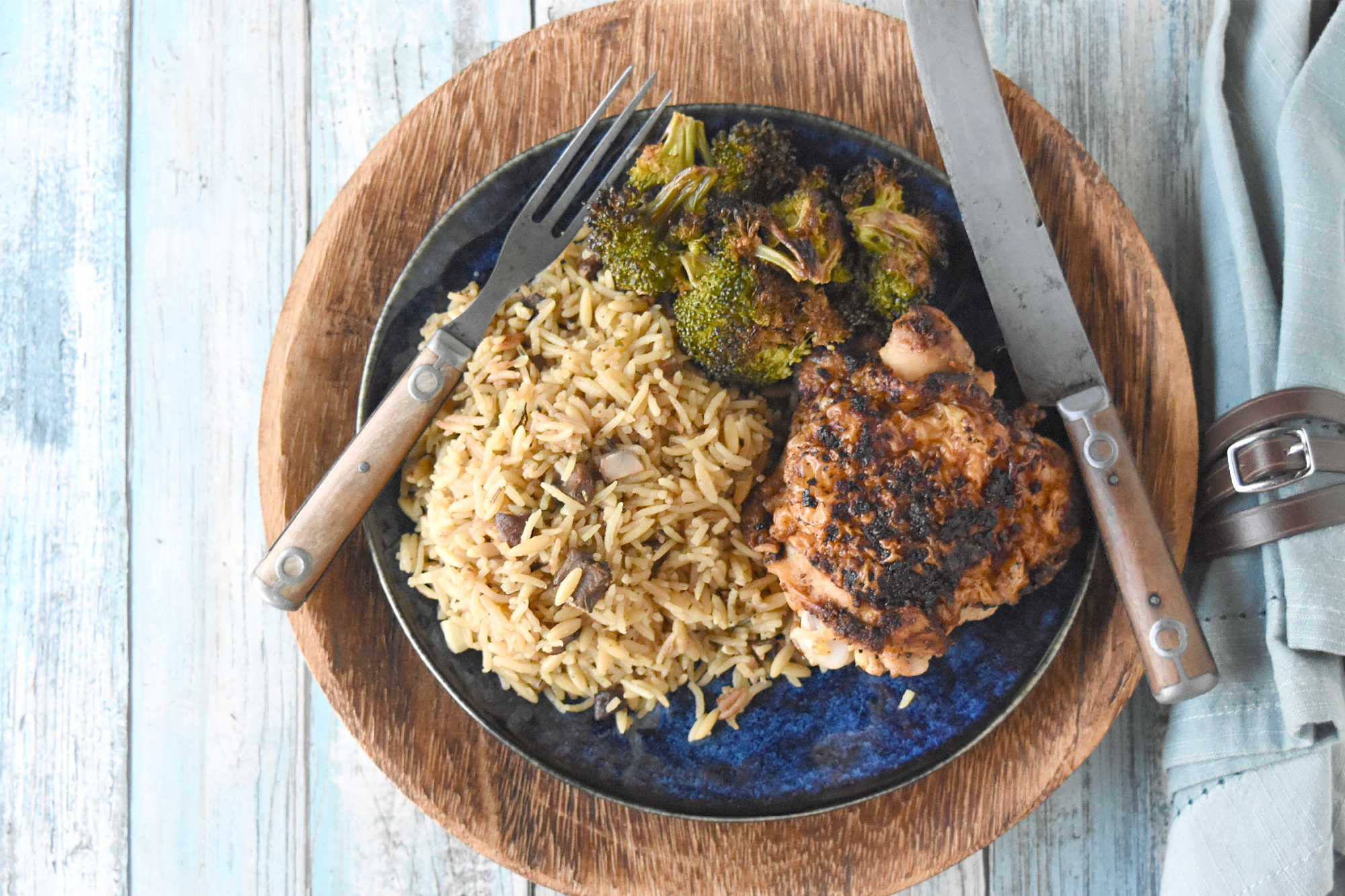
Homemade mushroom rice pilaf turns simple pantry ingredients into a savory, comforting side dish. Toasted orzo, fluffy long-grain rice, golden mushrooms, and fragrant seasonings create layers of flavor in one pan. The recipe feels polished enough for a holiday table, yet it remains easy enough for a weeknight dinner.
What Is Rice Pilaf and What Is Its History?
Rice pilaf is a method of briefly sautéing the grains in fat and then cooking it in seasoned liquid. Aromatics, spices, vegetables, and small pasta may join the pot. This toasting technique produces separate, flavorful grains instead of soft or sticky rice. Pilaf is celebrated for its light, fluffy texture with distinct, separate grains that readily absorb flavor.
Legend has it, that when Alexander the Great conquered Samarkand (now Uzbekistan) around 330 BC they served his army a meal of rice and meat. The army loved the meal so much, they brought the recipe back home to Macedonia. Fast forward to the 10th century where a scholar and physician, Ibn Sina, analyzed and published the ingredients. He cited the health benefits of what he called palov osh.
Rice pilaf became the ultimate travel food for merchants on the Silk Road. With it’s simple ingredients and dried rice, it was easy to prepare using local ingredients. And as empires expanded, this recipe grew in popularity. As it landed in each country along the way, they customized the recipe with their ingredients and seasonings.
It gained additional popularity when the boxed variety showed up on the grocery store shelves. The Italian Macaroni Company out of San Francisco recognized how popular this recipe could be. They paired the rice with toasted pasta and called it “Rice-a-Roni” which we know today. At the same time, another company created by an Armenian immigrant, made their Near East Rice Pilaf. After that, the rest of history!
Choose the Right Rice and Mushrooms for Separate, Flavorful Grains
Long-grain white rice is ideal for this recipe because it cooks into light, separate grains. Basmati and jasmine rice also make excellent pilaf. Basmati stays especially distinct and adds a delicate nutty aroma. Jasmine creates a slightly softer texture with a gentle floral scent. Standard long-grain rice remains the most neutral choice and allows the mushrooms, garlic, and herbs to shine. Rinsing any white rice removes excess surface starch and reduces gumminess. Drain it thoroughly before adding it to the pan so it can toast rather than steam.
Brown rice, wild rice blends, and converted rice can also be prepared pilaf-style, but they require different amounts of liquid and longer cooking times. Arborio and other short-grain varieties are less suitable when the goal is a fluffy pilaf because their higher starch content creates a creamier, stickier result.
I used cremini mushrooms in this recipe, but there are others you can use. White button mushrooms are mild, affordable, and easy to find. They’re a dependable choice for a lighter pilaf. Cremini mushrooms are simply more mature, so they offer a firmer texture and richer taste. Portobello mushrooms are fully mature creminis. Their bold flavor works well. Make sure to remove the gills with a spoon otherwise they will darken the pilaf.
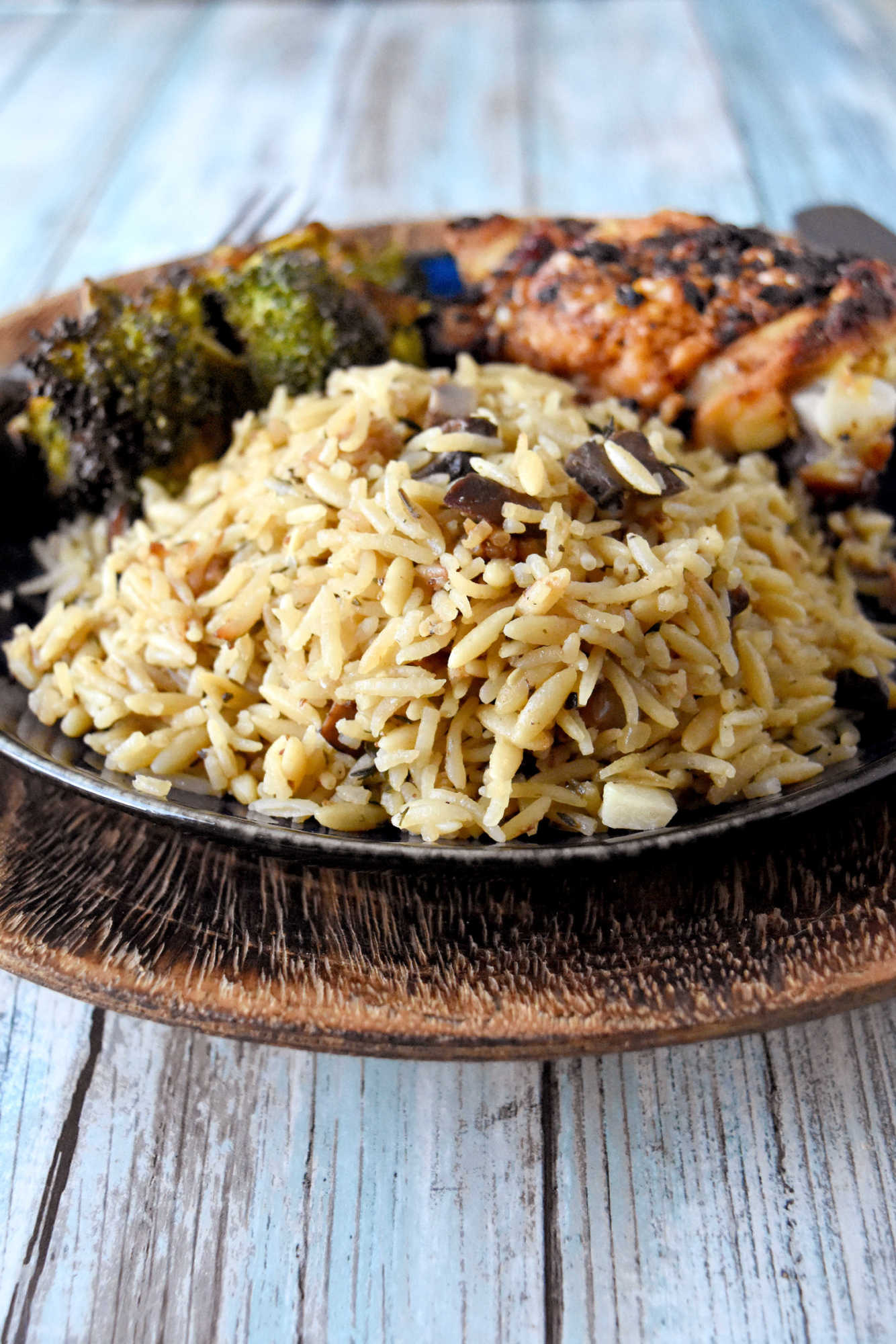
Sliced shiitake mushrooms add a meaty texture and savory depth. Discard their tough stems before cooking. Oyster mushrooms are delicate and slightly sweet. Their tender edges brown beautifully. Baby bella, mixed gourmet, and pre-sliced mushroom packages are also convenient options. Avoid crowding the pan regardless of the variety. The mushrooms need direct contact with the hot surface so their moisture evaporates. This allows the edges to caramelize instead of steaming.
Build Flavor First by Sautéing Aromatics and Mushrooms the Right Way
Start with butter and olive oil in a wide saucepan or deep skillet. Cook the mushrooms first until their moisture evaporates and their edges turn brown. Set them aside before adding the onion, so the pan stays hot and the mushrooms remain golden.
Cook the onion until soft, then add the garlic for about 30 seconds. Toast the orzo until it takes on a warm golden color. Stir in the rice and dry seasonings, coating every grain with the flavorful fat. I toast the rice until it starts to turn from a translucent white to a bright white. That’s when I add the liquid.
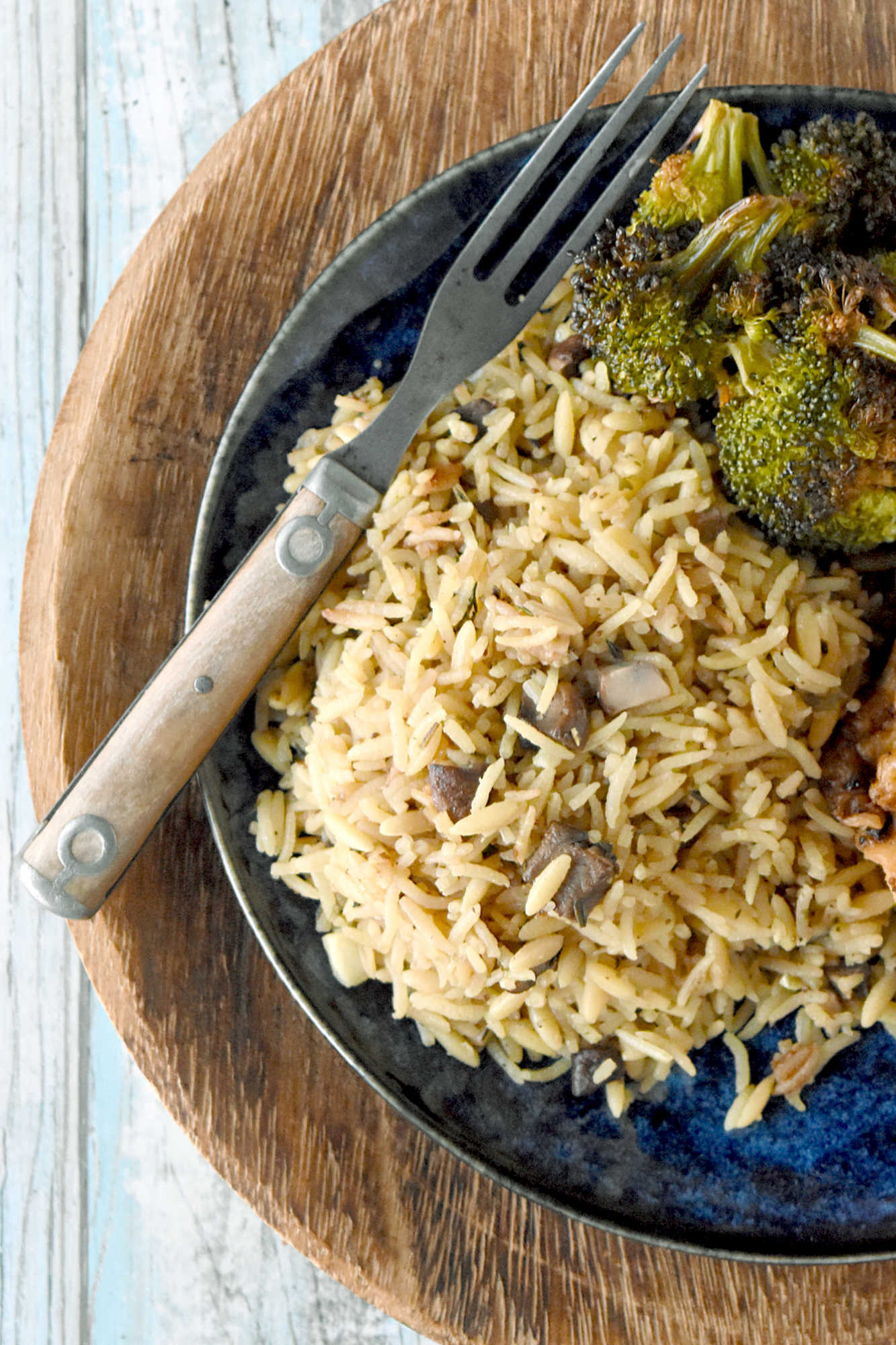
I have been making homemade rice pilaf since I was old enough to use the stove. I don’t think we had boxed rice pilaf until I was in high school. And probably because my sister and I whined until they caved. For me, the chicken bouillon gives rice pilaf that rich chicken flavor I don’t get with broth alone. That’s why I use an unsalted broth because the bullion can be salty.
Master the Rice-to-Liquid Ratio for Tender, Fluffy Pilaf
The basic ratio is 2 cups of liquid for 1 cup of rice and or pasta. It’s an easy ratio to remember for scaling this recipe. This recipe uses 1 cup of long-grain rice, 1/2 cup of orzo, and 3 cups of water or chicken broth. The pasta and rice both absorb liquid, while a small amount escapes as steam. The measured amount supports tender grains without leaving the pilaf soupy.
Use the same measuring cup for the rice, orzo, and liquid. Keep the heat low once the liquid reaches a boil. If the pan is unusually wide or the lid fits loosely, check near the end and add a small splash of hot broth only if the grains remain firm. The results may vary if your pan is smaller or larger. They can also vary based on altitude. It’s best to err on the side of less water because you can always add more if needed, but you can’t remove water if there’s too much.
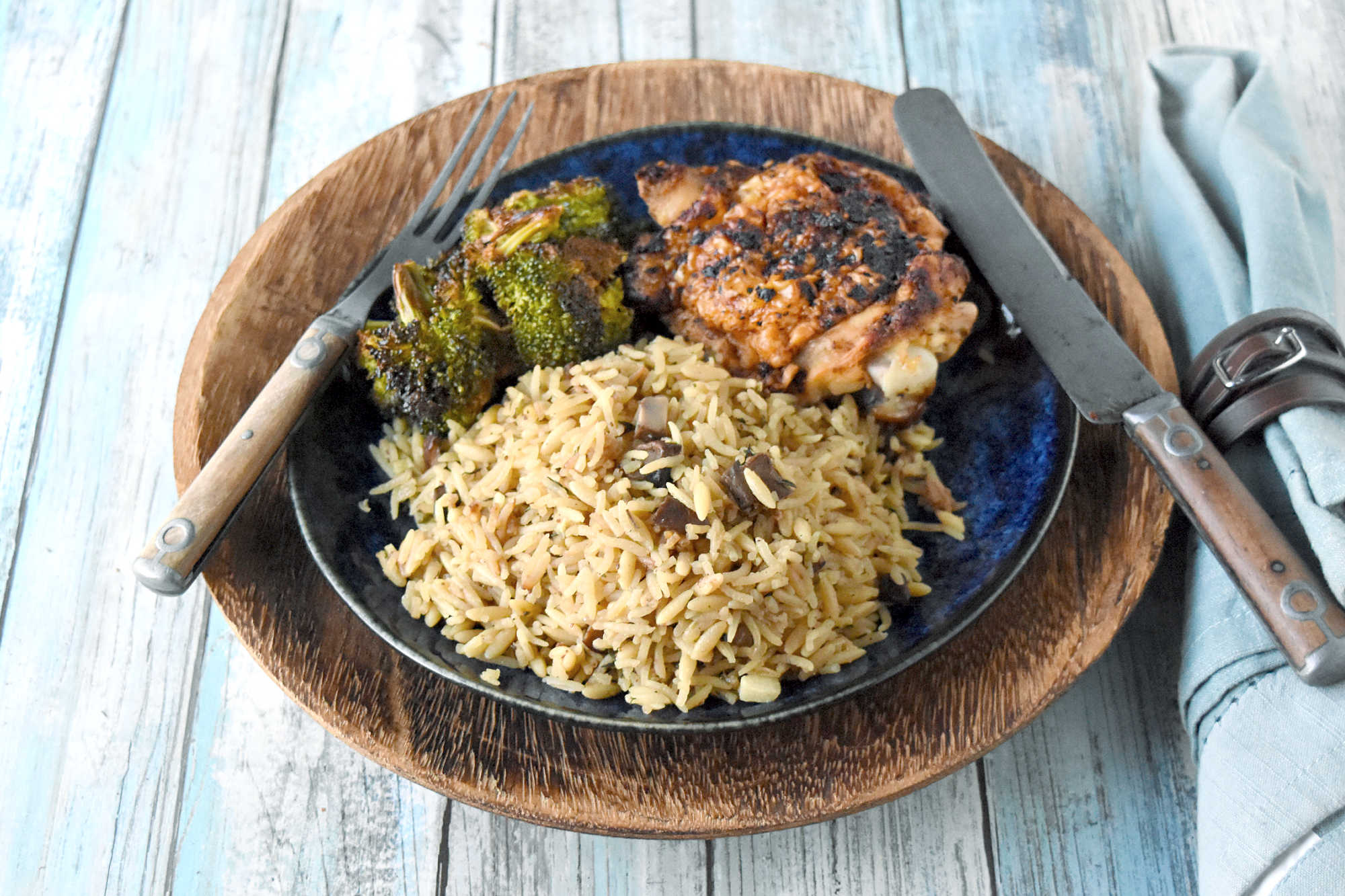
Steaming the Rice – Leave it covered!
Steaming the rice makes it fluffy. It’s not easy to cover and let it do its thing, but that’s what’s best. Bring the seasoned liquid to a full boil before adding the mushrooms back to the pan and covering it. Then reduce the heat to its lowest steady setting. A tight lid traps steam, allowing the rice and orzo to cook evenly without frequent stirring. If excessive steam escapes, try a piece of foil under the lid for a tighter fit.
KEEP THE LID CLOSED! It needs to stay closed for at least 18 minutes. Lifting it releases heat and moisture. Stirring can break the grains and activate more starch. All of this prevents light and fluffy rice. Remove the pan from the heat when the liquid is absorbed and the rice is tender. Then let it rest for at least 10 minutes. This trapped steam finishes cooking the centers of the grains. It redistributes moisture throughout the pan. This short pause prevents wet patches and dry spots.
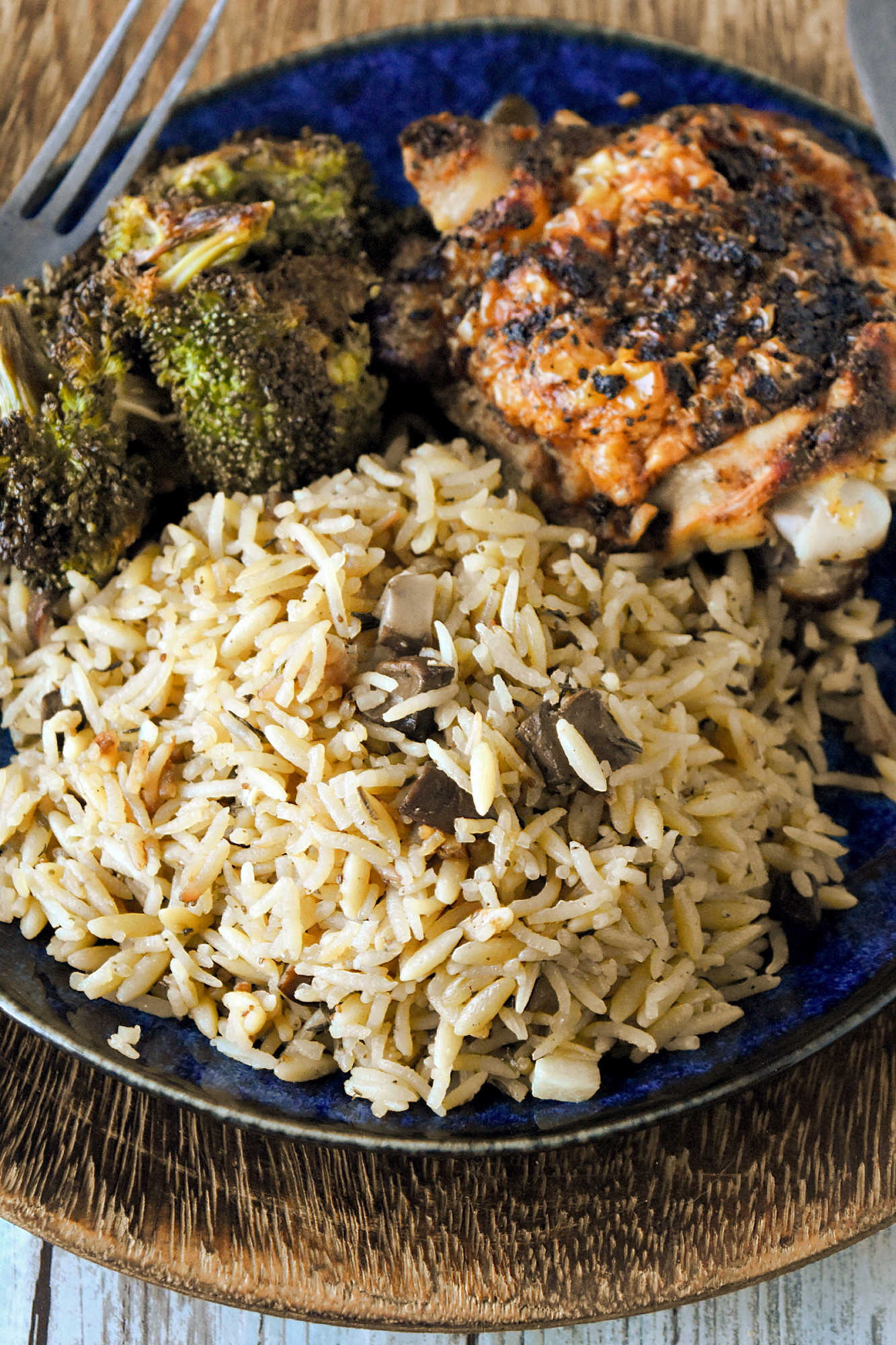
Why This Homemade Rice Pilaf Is Better Than Boxed Pilaf
Homemade rice pilaf offers fresher flavor and far more control than a boxed mix. Real butter, sautéed mushrooms, fresh onion, and garlic build savory depth from the beginning. The aromatics smell richer as they cook, and browning the mushrooms adds flavor. You won’t get flavor like this with a powdered seasoning packet. Chicken broth and bouillon can be adjusted to complement the rest of the meal. Low-sodium options also make it easier to control the salt.
Texture is another major advantage. Toasting the orzo and rice creates a warm, nutty note and helps the grains remain distinct. Boxed pilaf can become overly soft or salty. Especially since its seasoning packet and cooking time leave little room for adjustment.
With a homemade version, the heat, liquid, and resting time can be tailored to the rice and the pan. The recipe is also easy to customize with different mushrooms, fresh herbs, and vegetables. You can add toasted nuts or try another type of broth entirely. It takes only a little more effort than opening a box, but the finished side tastes more balanced. It looks more inviting and feels special enough for a holiday table.
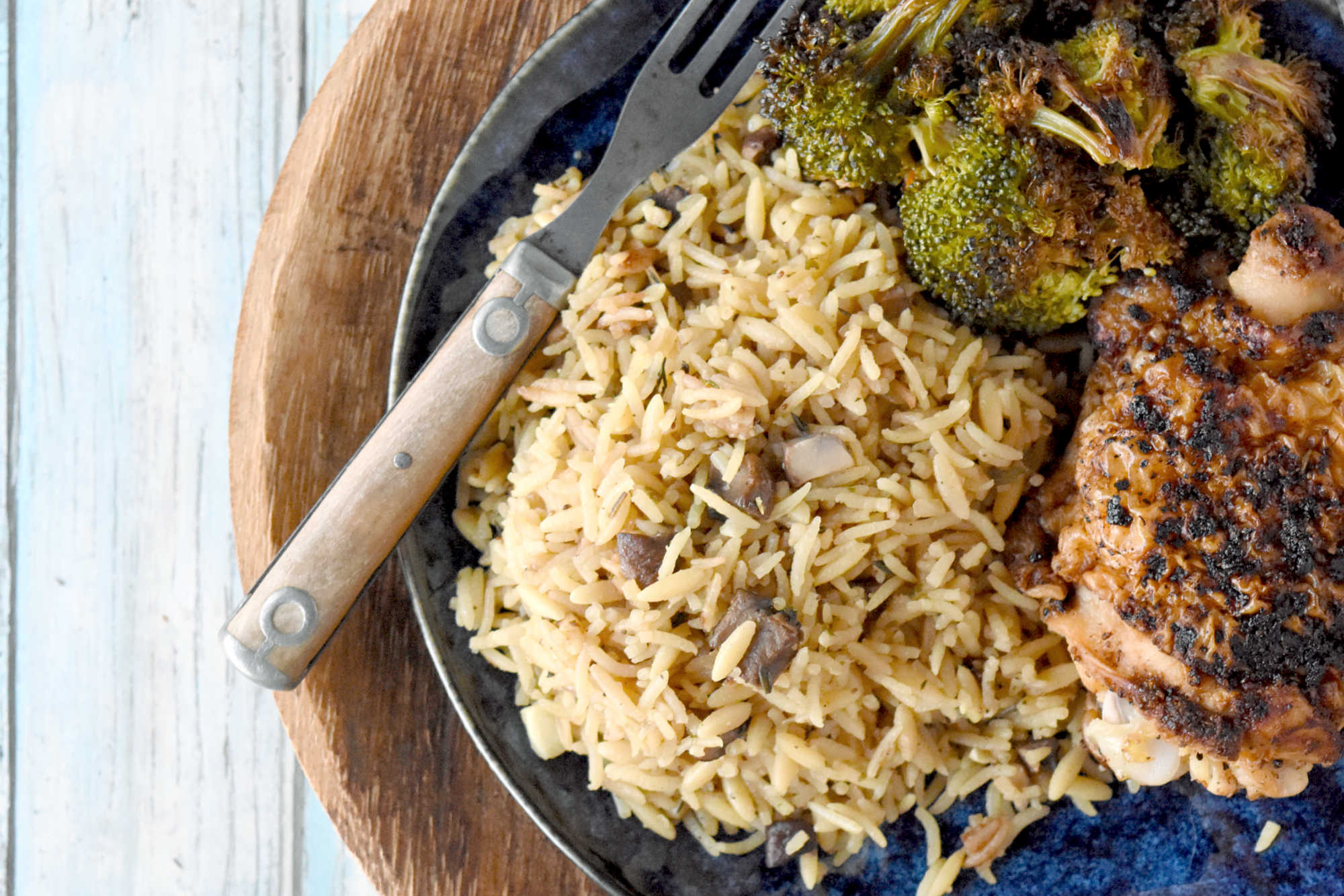
What Homemade Mushroom Rice Pilaf Tastes Like
Each forkful tastes buttery, savory, and gently earthy. The toasted orzo adds a warm, nutty note, while the long-grain rice keeps the texture light. Browning the mushrooms concentrates their natural flavor and gives them tender centers with caramelized edges. They add depth without overpowering the herbs or aromatics. The result is rich and comforting, but it never feels heavy.
Garlic, onion, parsley, and Italian seasoning give the pilaf familiar comfort-food appeal. Chicken bouillon adds a satisfying savory backbone, while the butter rounds out every bite. The grains stay tender and separate, and the mushrooms add a pleasant chew against the delicate rice and pasta. This homemade mushroom rice pilaf is simple enough for an everyday dinner, yet polished enough to serve beside turkey, roast chicken, ham, or beef during the holidays. Its balanced flavor also pairs well with roasted vegetables and fresh salads.

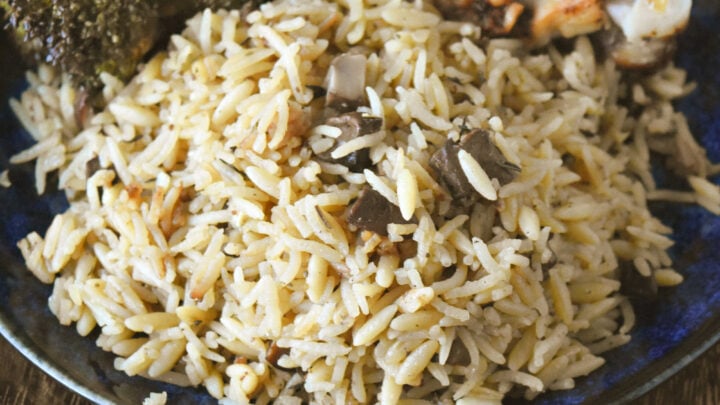
Homemade Mushroom Rice Pilaf
The quiet side dish just became the table favorite. Butter, garlic, herbs, and deeply browned goodness make every forkful cozy enough for Sunday supper and special enough for a celebration.
Ingredients
- 1 tablespoon butter
- 1 tablespoon extra-virgin olive oil
- 8 ounces cremini or white button mushrooms, evenly sliced
- 1/2 cup orzo pasta
- 1 cup long-grain rice, rinsed and well drained
- 1/3 cup finely chopped onion
- 1 tablespoon minced garlic
- 1 tablespoon chicken bouillon
- 1 tablespoon dried minced onion
- 1 teaspoon garlic powder
- 1 teaspoon Italian seasoning
- 1 teaspoon dried parsley
- 3 cups chicken broth
Instructions
- Melt the butter with the olive oil in a wide saucepan or deep skillet over medium-high heat.
- Add the mushrooms in an even layer. Cook until their moisture evaporates and the edges brown, about 6 to 8 minutes. Transfer them to a plate.
- Add the fresh onion to the pan and cook until softened, about 3 minutes. Stir in the garlic and cook for 30 seconds.
- Add the orzo and cook, stirring often, until golden. Stir in the drained rice, bouillon, dried onion, garlic powder, Italian seasoning, and dried parsley.
- Pour in the water or broth. Stir once, then bring the mixture to a full boil.
- Cover the pan and reduce the heat to low. Cook without lifting the lid for about 18 minutes, or until the liquid is absorbed.
- Remove the pan from the heat. Keep it covered and let the pilaf rest for 10 minutes.
- Fluff the pilaf gently with a fork. Fold in the browned mushrooms, taste, and adjust the seasoning before serving.
Nutrition Information
Yield
10Serving Size
1Amount Per Serving Calories 107Total Fat 3gSaturated Fat 1gUnsaturated Fat 2gCholesterol 5mgSodium 614mgCarbohydrates 17gFiber 1gSugar 2gProtein 3g
More Side Dish Recipes:
- Roasted Mushrooms from Hezzi-D’s Recipe Box
- Roasted Delicata Squash and Sweet Potatoes with Cranberry Glaze from A Day in the Life on a Farm
- Parmesan Butternut Squash from Jolene’s Recipe Journal
- Homemade Mushroom Rice Pilaf fromA Kitchen Hoor’s Adventures
- Gluten Free Magic Chicken Bites from Sneha’s Recipe
- Sausage Tortellini Soup from Art of Natural Living
- Loaded Baked Potato Casserole with Fried Onions from Blogghetti
- Beer Macaroni and Cheese from The Spiffy Cookie
- Jalapeno Cheddar Swirls from Magical Ingredients
- Potato, Corn, & Pepper Skillet with Pancetta from Karen’s Kitchen Stories


